

Ramadan in the United States has evolved from a private religious observance into a visible, distinctively "American" cultural phenomenon. For the estimated 3.85 million Muslims in the U.S., the holy month is a period of intense physiological discipline and spiritual renewal that occurs against the backdrop of a secular 9-to-5 society. This friction has sparked unique adaptations in personal identity, domestic traditions, and institutional policies.
1. The Personal Experience: A "Ramadan Reset"
The personal impact of Ramadan in America is defined by the clash between biological rhythms and social obligations. Unlike in Muslim-majority countries where work hours often shorten, American Muslims must maintain peak performance while fasting for up to 16 hours and navigating acute sleep deprivation due to nightly Taraweeh prayers and pre-dawn Suhoor meals.
-
Physiological Reality: The "shift delay" in sleep cycles creates a condition mimicking social jetlag, often leading to daytime fatigue and "brain fog". However, studies suggest that while physical energy dips, psychological tension often decreases, replaced by a sense of spiritual vigor.
-
Mental Health: Mental health professionals increasingly frame the month as a "Ramadan Reset"—a cognitive-behavioral intervention that strengthens impulse control and resilience. However, for neurodivergent individuals (e.g., ADHD, ASD) or those with eating disorders, the disruption of routine and medication schedules presents significant challenges requiring clinical support.
-
The Convert Experience: For converts to Islam, Ramadan can be a time of acute isolation. Without the familial infrastructure of support, the pre-dawn meal is often eaten alone. The mosque serves as a critical "surrogate family" during this time, where communal Iftars help bridge the gap between theological belonging and social loneliness.
2. Domestic Life: The "Christmas-ification" of Ramadan
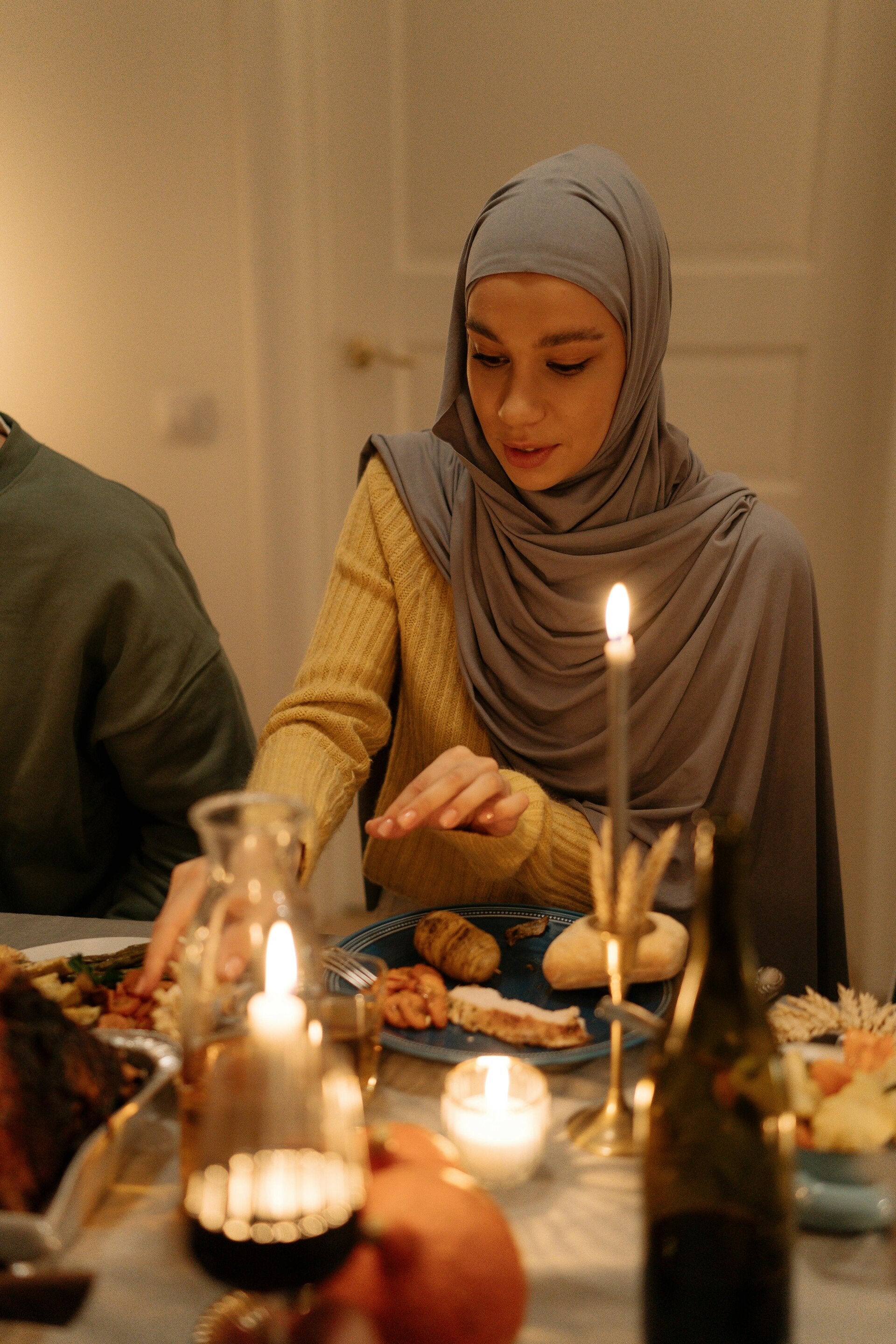
As Islam settles into the American suburban landscape, families are inventing traditions to normalize the holiday for their children amidst the visual dominance of Christmas and Halloween.
-
Decor and Rituals: The "Ramadan Tree" (often a crescent-shaped artificial tree), "Ramadan Countdowns" (inspired by Advent calendars), and elaborate light displays on house exteriors have become mainstream. These decorations serve a dual purpose: they create joy for Muslim children and signal "American-ness" to neighbors.
-
Culinary Fusion: The Iftar table has become a melting pot of "Halal American" cuisine. Traditional dishes like samosas now sit alongside "Tandoori Tacos," "Halal BBQ," and fusion burgers, reflecting a younger generation that seamlessly blends their ethnic heritage with American tastes.
3. Institutional Shifts: From Conflict to Accommodation
The most tangible social effects are visible in schools and workplaces, where the "religious clock" of Ramadan has forced secular institutions to adapt.
-
K-12 Education: Muslim students often face the "lunchroom dilemma," sitting in cafeterias while fasting. In response, progressive districts are creating "alternative spaces" (libraries or art rooms) for fasting students during lunch []. A major milestone in civic inclusion is the recognition of Eid al-Fitr as a school holiday in diverse districts like New York City, Lewiston (Maine), and others, validating the identity of Muslim students.
-
Workplace DEI: Corporate America is moving from a "don't ask, don't tell" approach to proactive inclusion. Major companies now offer "quiet rooms" for prayer, flexible "split shift" hours to accommodate naps, and hold corporate interfaith Iftars as team-building events. However, discrimination persists in blue-collar sectors, where rigid schedules often conflict with prayer and fasting needs.
4. The Economics of Piety
Ramadan drives significant economic activity through charity and consumer spending.
-
Zakat (Charity): There is a strategic shift toward "Zakat for America," where obligatory alms are distributed locally rather than sent abroad. Organizations like the Zakat Foundation of America and the National Zakat Fund focus on local poverty relief, student debt, and healthcare, strengthening the American social safety net.
-
The "Purple Dollar": With rising purchasing power, the "Ramadan Rush" has prompted mainstream retailers and luxury brands to launch targeted campaigns and collections, acknowledging the Muslim consumer as a vital economic demographic.
5. Civic Engagement and Solidarity
Ramadan has transcended religious boundaries to become a platform for public diplomacy and solidarity.
-
Interfaith Iftars: "Fast-a-Thons" on university campuses and "Interfaith Iftars" in city halls allow non-Muslims to experience fasting and breaking bread, humanizing the community and eroding Islamophobic stereotypes.
-
Political Expression: In recent years, the fast has also been politicized as an act of "somatic solidarity," particularly concerning global crises like the conflict in Gaza. For many, the physical sensation of hunger has deepened their empathy and political resolve, transforming the fast into an act of protest and remembrance.
In summary, the American Ramadan is a complex season that blends spiritual discipline with cultural innovation. It is reshaping how Muslim Americans view themselves—not as outsiders looking in, but as integral contributors to the nation's social, economic, and religious fabric.
Add comment
Comments